
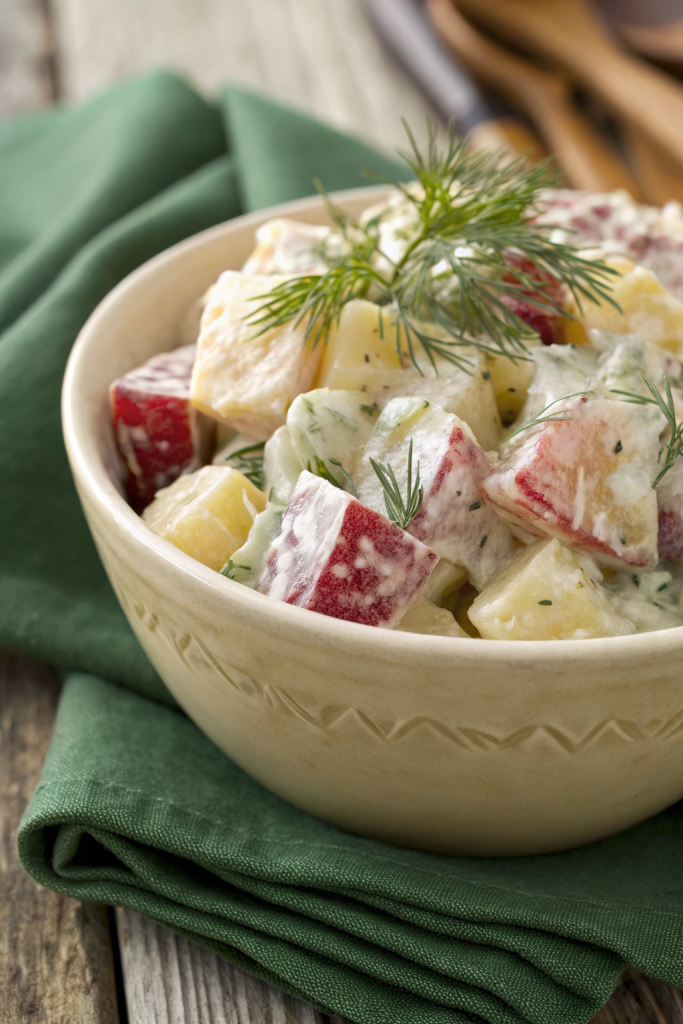
Potato Salad With Dill tastes creamy, bright, and herby with just enough tang to keep each bite interesting. It works perfectly for potlucks, picnics, weeknight dinners, and it comes together in about 35 minutes. I grew up in the Midwest, so I basically measure summer by how many bowls of potato salad I make and how fast they disappear.
Why Choose This Potato Salad With Dill
This potato salad with dill tastes lighter than the heavy mayo bombs that show up at some cookouts. Fresh dill, a little vinegar, and a touch of mustard keep the flavor sharp and lively, while tender potatoes and a creamy dressing keep it comforting.
You can prep it ahead, chill it, and pull it out when guests walk in. It travels well, holds up on a buffet, and pairs with almost anything from grilled chicken to veggie burgers.
“This potato salad with dill tastes like summer in a bowl and disappears from the table every single time. ★★★★★”
Ingredients You Need
Potatoes
- 2 pounds small yellow potatoes or Yukon Golds, scrubbed
- 1 tablespoon kosher salt for the cooking water
Dressing
- 1/2 cup mayonnaise (Duke’s or Hellmann’s both work great)
- 1/3 cup sour cream or plain Greek yogurt
- 2 tablespoons Dijon mustard
- 2 tablespoons apple cider vinegar or white wine vinegar
- 1 teaspoon granulated sugar or honey
- 1/2 to 3/4 teaspoon kosher salt, to taste
- 1/2 teaspoon black pepper, freshly ground
Herbs & add-ins
- 1/3 to 1/2 cup fresh dill, finely chopped, plus extra for garnish
- 3 green onions, thinly sliced (or 1/4 cup finely minced red onion)
- 2 ribs celery, finely diced
- 3 hard boiled eggs, chopped (optional but classic)
- 1 tablespoon dill pickle brine or chopped dill pickles, optional for extra tang
Pantry shortcuts and swaps
- Use dried dill in a pinch: 1 to 1.5 teaspoons, and add more to taste.
- Use all mayonnaise if you do not keep sour cream or yogurt on hand.
- Use yellow mustard if you prefer a milder flavor.
Equipment
- Large pot for boiling potatoes
- Colander
- Cutting board and sharp knife
- Large mixing bowl
- Small bowl and whisk or fork for dressing
- Rubber spatula or large spoon for folding everything together
Quick Tips & substitutions
- Cut potatoes into even chunks so they cook at the same rate.
- Salt the cooking water generously so the potatoes taste seasoned from the inside.
- Let potatoes cool until just warm before you add the dressing so they soak up flavor but do not turn mushy.
- Use Greek yogurt instead of sour cream for extra protein and a tangier flavor.
- Skip eggs for a lighter side or if you cook for someone with an egg allergy.
- Use red potatoes if you like a firmer texture that holds shape better.
- Stir in a spoonful of pickle brine if you love a sharper, tangier potato salad.
How to Make Potato Salad With Dill
Step 1: Prep and cook the potatoes
Scrub the potatoes and cut them into bite size chunks, about 1 to 1.5 inches. Place them in a large pot and cover with cold water by about an inch. Stir in the tablespoon of kosher salt.
Bring the pot to a gentle boil over medium high heat. Reduce the heat to maintain a steady simmer and cook until the potatoes feel tender when you pierce them with a fork, about 10 to 15 minutes. Watch closely so they soften but do not fall apart.
Step 2: Drain and cool the potatoes
Drain the potatoes in a colander and let the steam escape for a few minutes. Spread them out on a sheet pan or large plate so they cool faster. Let them cool until just warm to the touch, about 10 to 15 minutes.
Warm potatoes absorb dressing better and hold flavor, but very hot potatoes can break and turn gluey. Aim for that cozy warm stage, not scorching.
Step 3: Mix the creamy dill dressing
While the potatoes cool, grab a small bowl. Whisk together mayonnaise, sour cream or yogurt, Dijon mustard, vinegar, sugar or honey, salt, and pepper. Taste and adjust with more salt, vinegar, or dill if you want a stronger flavor.
Stir in the chopped dill so it perfumes the dressing. The dressing should taste a little stronger than you want the final salad to taste, since the potatoes will mellow it out.
Step 4: Combine potatoes and mix ins
Add the warm potatoes to a large mixing bowl. Add celery, green onions or red onion, chopped eggs if you use them, and pickles or pickle brine if you like that extra tang. Pour the dressing over the top.
Use a rubber spatula to fold everything together gently. Coat all the potatoes without smashing them. If the salad looks a little dry, add another spoonful of mayonnaise or a splash of vinegar.
Step 5: Chill and serve
Taste again and adjust seasoning with more salt, pepper, dill, or vinegar. Cover the bowl and chill the potato salad with dill for at least 1 hour so the flavors settle and deepen.
Right before serving, give it a gentle stir and sprinkle extra fresh dill on top. Serve cold or at cool room temperature.
Recipe Variations
- Gluten free: Use gluten free mustard and vinegar brands if you cook for someone with celiac, since some brands add hidden gluten.
- Vegan: Use vegan mayonnaise and skip the eggs, and use plant based yogurt instead of sour cream.
- Low carb: Swap half the potatoes with steamed cauliflower florets and keep the same dill dressing.
- Extra protein: Stir in chopped grilled chicken or canned chickpeas for a more filling side.
- More crunch: Add diced bell pepper, extra celery, or sliced radishes.
- Smoky version: Sprinkle smoked paprika or add a little chopped smoked paprika sausage substitute.
- Herb mix: Mix dill with parsley and chives for a more complex herb flavor.
Ways to Serve Potato Salad With Dill
- Serve with grilled chicken, turkey burgers, or veggie burgers.
- Pack into lunch boxes with sliced cucumbers and cherry tomatoes.
- Spoon alongside baked salmon or roasted cod.
- Add to a picnic spread with coleslaw, fruit salad, and corn on the cob.
- Use leftovers as a base and top with canned tuna or chickpeas for a quick lunch bowl.
Storage Options
Store leftover potato salad with dill in an airtight container in the refrigerator. It keeps well for about 3 to 4 days, and the dill flavor often deepens by the next day. Stir before serving, and add a spoonful of mayonnaise or a splash of vinegar if it thickens too much.
Keep it chilled and avoid leaving it out at room temperature for more than 2 hours, especially at outdoor gatherings. If you serve it outside, nestle the bowl in a larger bowl filled with ice so it stays cool and safe.
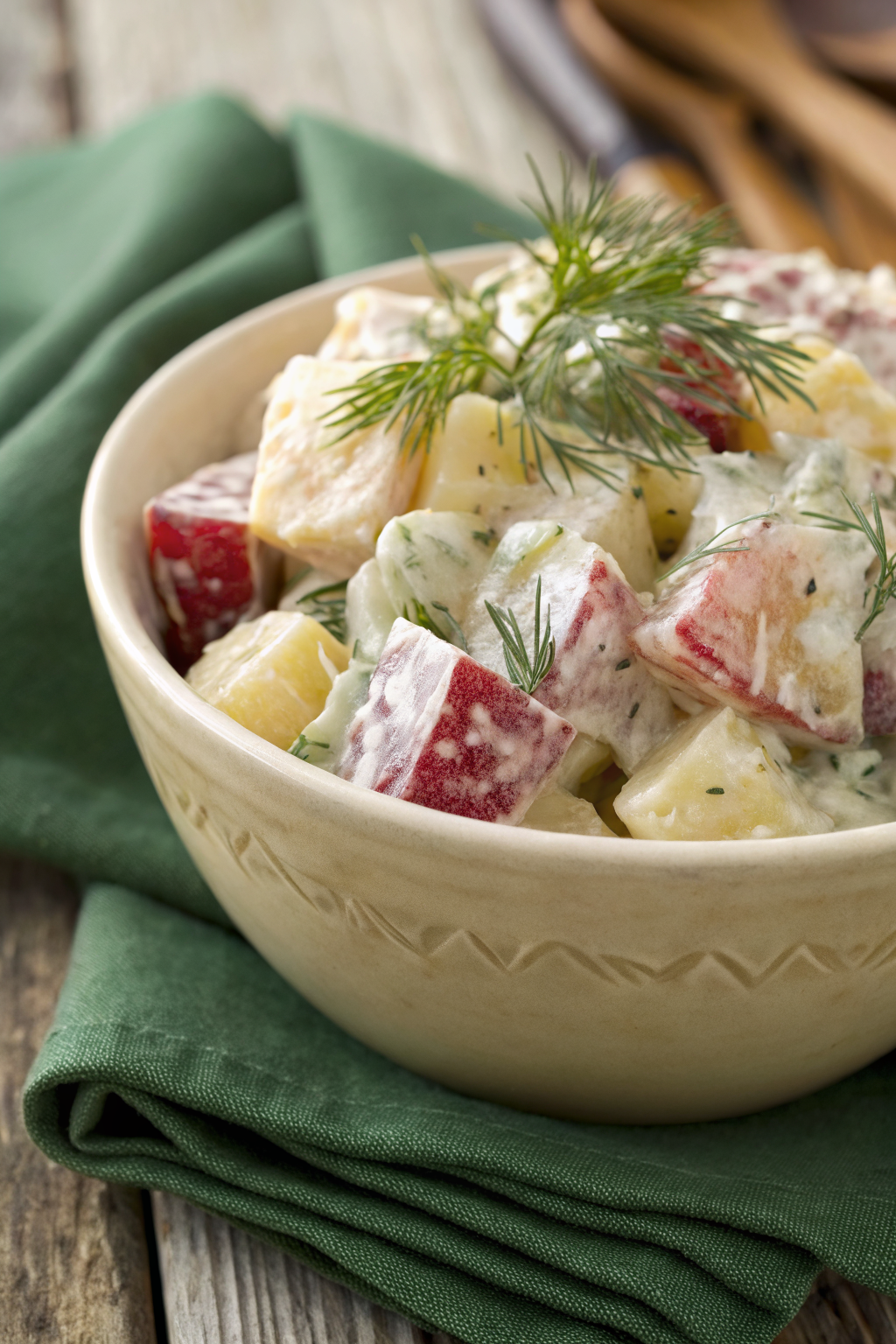
Potato Salad With Dill
Ingredients
Instructions
- Scrub the potatoes and cut them into bite-size chunks about 1 to 1.5 inches. Place them in a large pot, cover with cold water by about an inch, and stir in the tablespoon of kosher salt.
- Bring the pot to a gentle boil over medium-high heat, then reduce to a steady simmer. Cook until the potatoes are just tender when pierced with a fork, about 10 to 15 minutes, without letting them fall apart.
- Drain the potatoes in a colander and let the steam escape for a few minutes. Spread them on a sheet pan or large plate and let cool until just warm to the touch, about 10 to 15 minutes.
- While the potatoes cool, whisk together the mayonnaise, sour cream or yogurt, Dijon mustard, vinegar, sugar or honey, salt, and pepper in a small bowl. Taste and adjust seasoning to be slightly stronger than you want the final salad to taste.
- Stir the chopped fresh dill into the dressing so it is well distributed.
- Add the warm potatoes to a large mixing bowl. Add the celery, green onions or red onion, chopped eggs if using, and dill pickle brine or chopped pickles if desired.
- Pour the dill dressing over the potatoes and mix-ins. Gently fold everything together with a rubber spatula, coating the potatoes without smashing them. Add an extra spoonful of mayonnaise or a splash of vinegar if the salad looks dry.
- Taste and adjust with more salt, pepper, dill, or vinegar as needed. Cover the bowl and chill the potato salad for at least 1 hour so the flavors meld.
- Before serving, give the salad a gentle stir and garnish with extra fresh dill. Serve cold or at cool room temperature.
Notes
Approximate per serving (8 servings): 260–300 calories; fat 18–22 g; saturated fat 3–5 g; carbohydrates 22–26 g; fiber 2–3 g; sugars 3–4 g; protein 5–6 g; sodium 350–500 mg. Values will vary based on specific ingredients, add-ins (such as eggs and pickles), and portion size.